
The Four Fundamentals That Shape Health Trajectory
Health decline is often attributed to age, genetics, or chance. In practice, it more commonly reflects prolonged imbalance among four foundational constraints that govern what the body can support over time: nutrition and energy availability, physical effort, recovery capacity, and elimination. When one of these is persistently overemphasized or neglected, the system adapts by compensating elsewhere, often by drawing on reserves or delaying completion.
When these four fundamentals remain proportionate, fewer compensations are required. Nutrition and energy availability supply the raw materials and fuel. Physical effort communicates what capacities are needed. Recovery capacity determines whether adaptation completes. Elimination clears byproducts and residual load, so those processes do not compete for limited resources. Sustained alignment across these constraints tends to support resilience with less accumulated strain. |
Try This
|
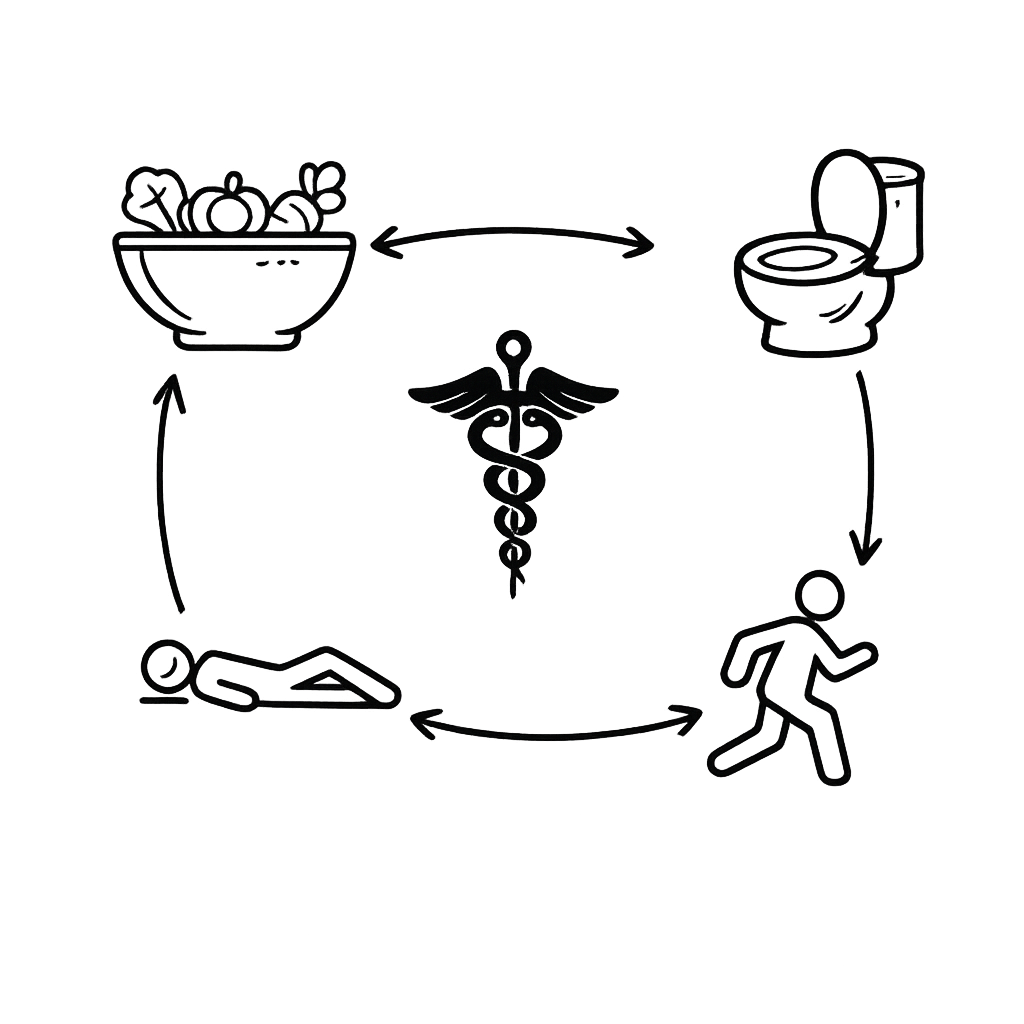 |
These patterns reflect how nutrition and energy availability, physical effort, recovery capacity, and elimination tend to reinforce each other under everyday conditions, shaping direction quietly before strain becomes visible. Each fundamental can be supported in many ways. For example, sleep is one expression of recovery, while other practices such as quiet reflection or meditation also tend to support parasympathetic nervous system activity that allows recovery and clearance to proceed.
Why It Matters
- Prevention works while the body is still maintaining balance through its own regulatory capacity.
- Early attention supports adaptation before recovery and clearance begin to compete for limited resources.
- When the body spends long periods quietly coping, gentle adjustments tend to lose their effect.
- Small signs matter because they appear while direction can still shift without force.
- Once balance must be actively managed rather than supported, prevention has passed its most effective window, although change in direction remains possible with greater effort.
What Not to Do
- Do not wait for things to break down before paying attention to your health.
- Do not assume everything is fine just because daily life feels manageable.
- Do not rely on treatment to replace early care and awareness.
- Do not mistake coping for being well.
- Do not expect rest alone to resolve what ongoing strain leaves behind.
- Do not treat food, movement, sleep, or stress as separate issues rather than parts of the same picture.
Bottom Line
The body works continuously to keep itself in balance, often coping quietly with everyday strain for long periods of time. Prevention matters because it works with that natural ability while change is still easier and options remain open. Paying attention earlier supports balance before treatment becomes necessary, even though change is always possible later with more effort. As described in Embracing My Vitality: Living Well in the Modern World, health is shaped gradually through ordinary daily patterns, long before it demands correction.