
Why Nourishing Food Is Not Assembled
What if the foods most advertised today, built for shelf life and convenience, should not really be called food.
Modern food is often made the way factories prefer, not the way eating works best. For speed, cost, and long shelf life, food is broken into basic ingredients, rebuilt into a stable product, and sometimes fortified with isolated nutrients that look impressive on the package. The problem is not only what is added, but what is removed or rearranged. When a food is rebuilt, it can look complete on a label while feeling thin in practice.
A steadier approach starts with a simple model. Nutrition quality and energy availability set the base for how supported you feel day to day, especially once physical effort enters the picture, and recovery needs to keep pace. When foods stay closer to their original form, nutrients tend to arrive together in familiar combinations, including fibers and plant compounds that often get stripped away. Higher-level factors like mindset, purpose, and perception can shape consistency and follow-through, but they cannot substitute for what the body actually receives from food, effort, and recovery. |
Try This
|
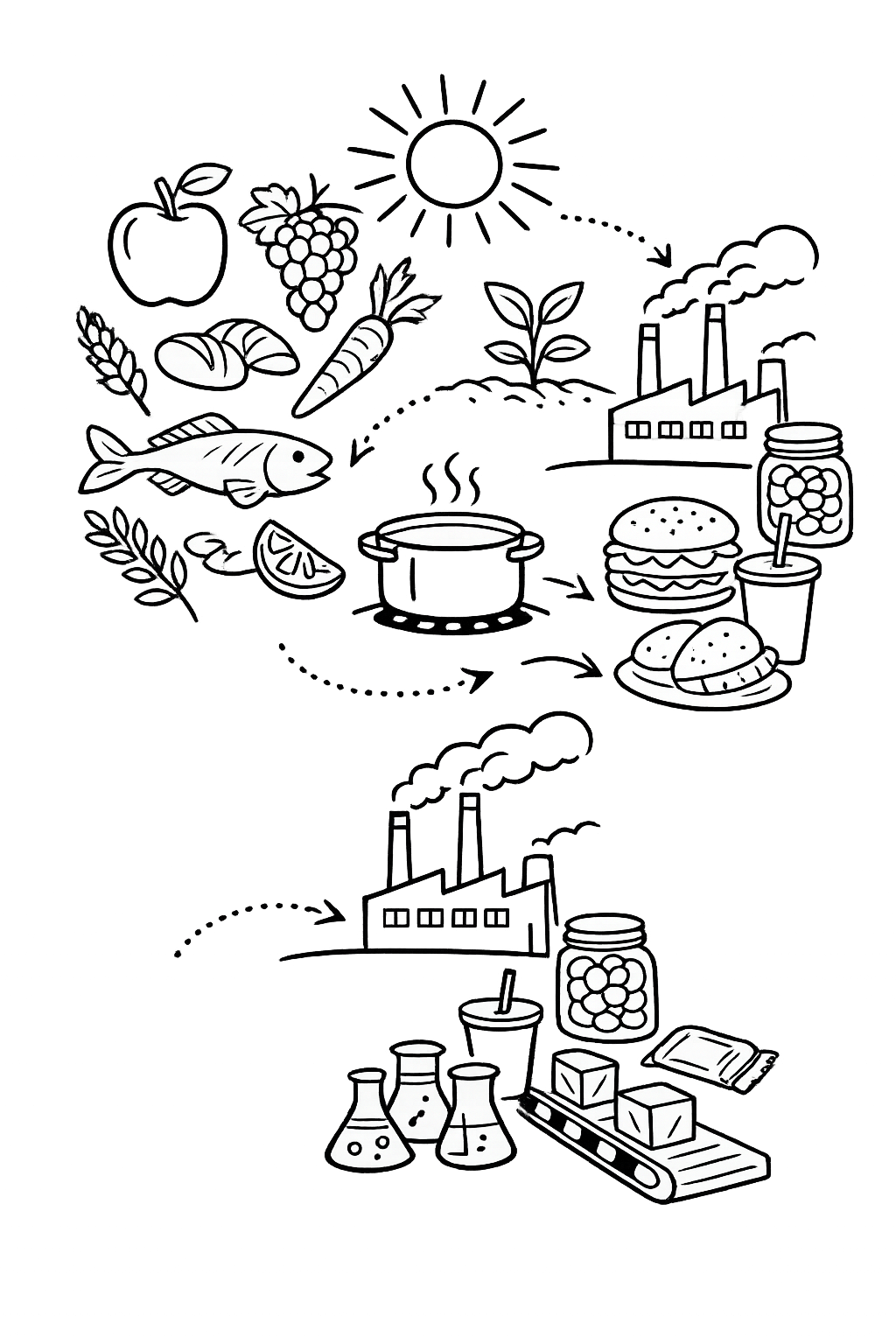 |
These patterns point in one direction. Freshness, variety, and familiar combinations reduce dependence on rebuilt products that rely on claims and fortification to feel complete. The goal is not purity; it is returning eating to something that gives back without needing a sales pitch.
Why It Matters
- Highly processed foods are often addictive by design, which can shift choice from hunger to habit
- Foods built for shelf life commonly trade nourishment for durability and uniformity
- Addictive flavors and textures can crowd out interest in simpler foods over time
- When appeal and convenience drive food design, nourishment tends to become secondary
- Repeated reliance on engineered foods can gradually reset expectations toward what lasts longest rather than what supports you best
What Not to Do
Bottom Line
If a product must be rebuilt for maximum shelf life and convenience, it deserves extra skepticism, even when the label looks virtuous. Fresh foods that still resemble what they were, eaten with variety, color, and familiar pairings, tend to feel more trustworthy than foods assembled from parts and then advertised as improved. In Embracing My Vitality: Living Well in the Modern World, the emphasis is direction, not perfection. Every step away from engineered substitutes and toward nourishing food changes the trajectory, often sooner than you expect.