
Nutrition Matters More Than Calories
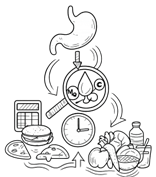
What if ongoing hunger after eating was not about eating too little, but about not getting enough from what was eaten. What if food quality and how the body takes it in mattered more than numbers. Appetite might then be read as feedback, not failure.
Try This
|
 |
Why It Matters
- Calorie-dense foods align with evolutionary reward signals, not modern nutritional needs.
- Food quality sets the range of nutrients available to the body.
- Absorption determines how much of that range becomes usable.
- Appetite often signals incomplete nourishment rather than insufficient eating.
- Over time, unresolved appetite increases dependence on external rules and counting.
What Not to Do
- Do not assume feeling full means nutritional needs were met.
- Do not treat hunger as a personal failure or lack of control.
- Do not expect calorie-dense foods to provide nutritional completion.
- Do not rely on pleasure or stimulation as indicators of nourishment.
- Do not use numbers to override persistent physiological signals.
Bottom Line
Humans are wired to seek calorie-dense food, but modern food environments exploit that wiring without delivering nutritional completion. Food quality determines what nutrition is available, absorption determines what becomes usable, and appetite reflects how complete that process feels. As explored throughout Embracing My Vitality: Living Well in the Modern World, nutrition depends on what food contains and what the body can use. When those conditions align, appetite becomes guidance rather than a problem to manage.