
Environment Shapes Choice
What if every day eating patterns are driven more by what is visible and convenient than by discipline?
Most eating behavior emerges from automatic responses to the immediate environment rather than deliberate decision making. Visibility, proximity, and ease of access tend to determine what is consumed long before intention is engaged. When foods designed for convenience and stimulation dominate visible spaces, they quietly steer intake regardless of personal goals.
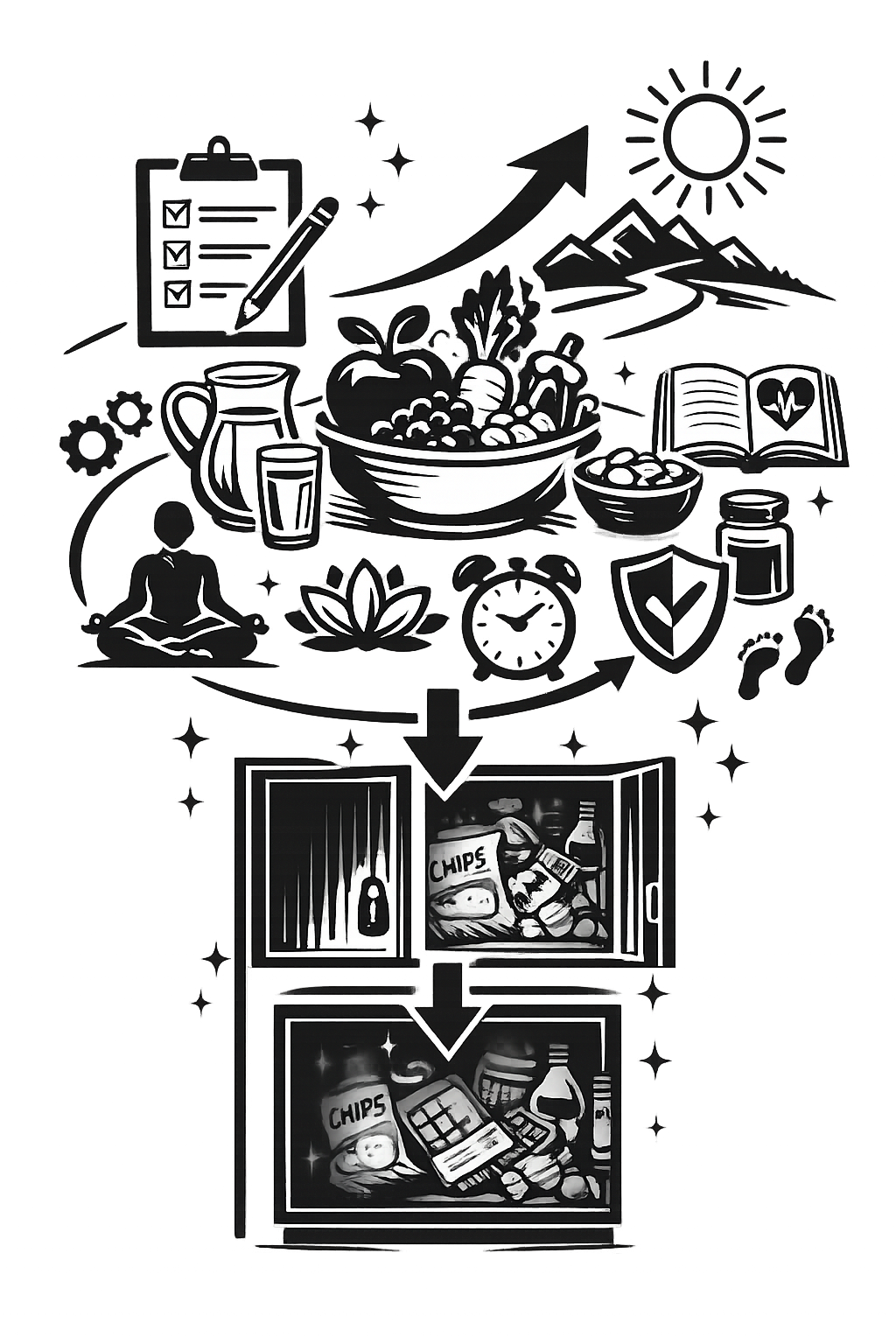
A supportive system treats nutrition quality, energy availability, physical effort, and recovery capacity as foundational constraints that must be protected rather than overridden. By shaping the home environment to reduce competing signals and reinforce nourishment cues, higher-level factors such as motivation and intention can amplify alignment instead of compensating for friction. |
Try This
|
 |
Why It Matters
- Persistent environmental cues can compound over time, shaping intake without conscious reinforcement
- When automatic behaviors dominate, higher-level intentions are diverted toward correction rather than direction
- Systems that rely on restraint often accumulate fatigue instead of capacity
- Environmental alignment tends to preserve resources for recovery and long-term trajectory
- Small, repeated exposures can outweigh infrequent deliberate choices
What Not to Do
- Do not rely on willpower to override an unsupportive food environment
- Do not keep highly tempting foods in plain sight and expect restraint
- Do not hide nourishing foods behind packaging or clutter
- Do not treat occasional motivation as a substitute for daily structure
- Do not design the kitchen around convenience foods and then blame habits
- Do not assume awareness alone will change automatic eating patterns
Bottom Line
Direction is shaped by what the environment makes easy and visible each day, not by what is intended in moments of resolve. Embracing My Vitality frames this as alignment rather than effort, where surroundings reduce friction instead of demanding restraint. Small environmental shifts set a trajectory that compounds steadily over time.
Embracing My Vitality book frames this principle as environmental alignment rather than personal struggle. The book is available worldwide on Amazon and expands on how small structural shifts set long-term trajectory.