
WHAT NUTRIENT DEFICIENCIES LOOK LIKE IN DAILY LIFE
What if “feeling fine” is not health, but the body quietly adapting to missing inputs?
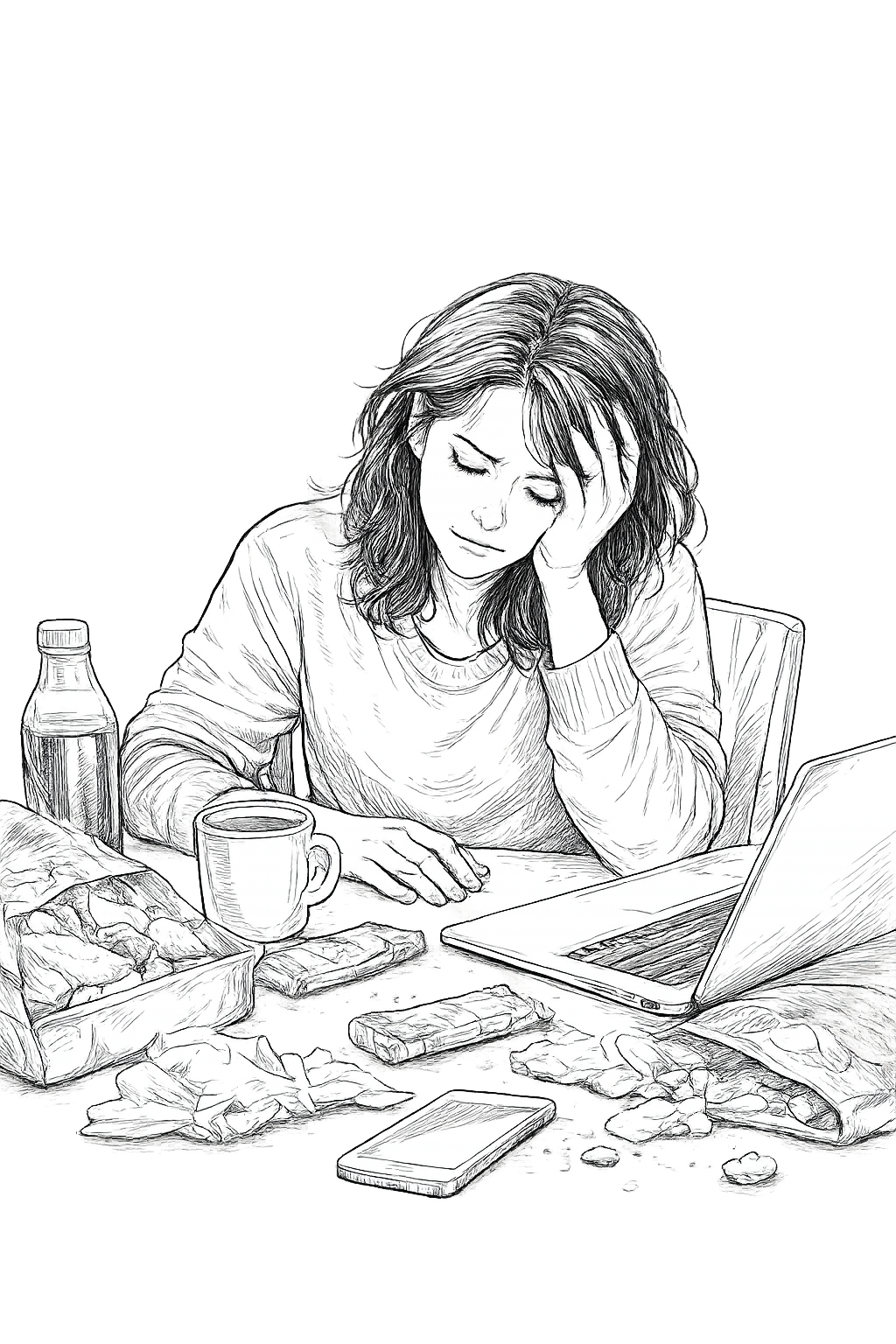
Most nutrient deficiencies do not show up as obvious problems because the transition is gradual. The shift happens quietly, beneath the noise of modern life. Daily pressures, constant stimulation, and background stress mask the change. Energy runs out a little faster. Focus fades on schedule. Sleep restores less than expected. Because nothing clearly breaks and life keeps moving, the body’s reduced capacity blends into routine and goes unnoticed. The way out is not chasing symptoms. It is rebuilding inputs and structure. When food repeatedly delivers fewer usable nutrients, the body shifts into conservation mode. The solution starts with changing what is consistently supplied, not forcing output. Restore nutrient density, stabilize intake patterns, and reduce reliance on stimulation to replace missing biology. This resets the system the body is adapting to. |
Try This
|
 |
These changes are not about discipline or restriction. They shift the inputs and timing the body is adapting to each day. When meals are simpler, more intact, and clearly bounded, digestion, energy, and recovery regain room to normalize.
Why It Matters
- Energy instability – Fatigue returns quickly, pushing reliance on stimulation to function
- Stress sensitivity – Reactivity increases and tension lingers, making small stressors harder to settle
- Cognitive drag – Focus, recall, and decision clarity drop under routine mental load
- Mood volatility – Emotional resilience narrows, with flatter mood or unexplained swings
- Muscular discomfort – Tightness, cramps, or weakness persist without clear physical cause
- Thermal sensitivity – Cold tolerance declines and temperature regulation feels unreliable
- Skin and tissue strain – Repair slows, with dryness, irritation, or brittle hair and nails
- Immune fragility – Minor infections and setbacks take longer to resolve
What Not to Do
- Do not normalize rising coffee or stimulant use as a personality or workload issue
- Do not replace meals with snacking, grazing, or liquids and call it convenience
- Do not excuse heightened stress reactivity as just life or modern pressure
- Do not assume normal lab ranges mean functional sufficiency
- Do not blame age or temperament for repeatable biological patterns
- Do not chase isolated symptoms instead of correcting daily inputs
Bottom Line
What feels like normal modern life often reflects a body operating with less margin. Energy instability, stress sensitivity, cognitive drag, mood volatility, physical tension, and slower repair are not separate problems. They form a single, repeatable pattern created when nutrient inputs thin out while demand stays high, pushing the system into conservation rather than capacity. This state can persist for years because nothing clearly breaks, yet performance, resilience, and recovery steadily erode.
Embracing My Vitality Living Well in the Modern World frames the way forward as structural change, not effort. When food choice, timing, and simplicity are rebuilt, the body no longer needs to adapt downward to keep up.