
Maintain A ealthy Microbiome
What if the health of your entire body depends on the invisible ecosystem inside your gut?
Modern life disrupts the microbiome at every level. Highly processed food, low fiber intake, chronic stress, sleep disruption, environmental toxins, and frequent antibiotic exposure reduce microbial diversity. A less diverse microbiome is associated with metabolic dysfunction, immune dysregulation, low grade inflammation, mood instability, and increased risk of chronic disease. The challenge is structural. The modern food system favors convenience over complexity, while lifestyle patterns fragment circadian rhythm and recovery.
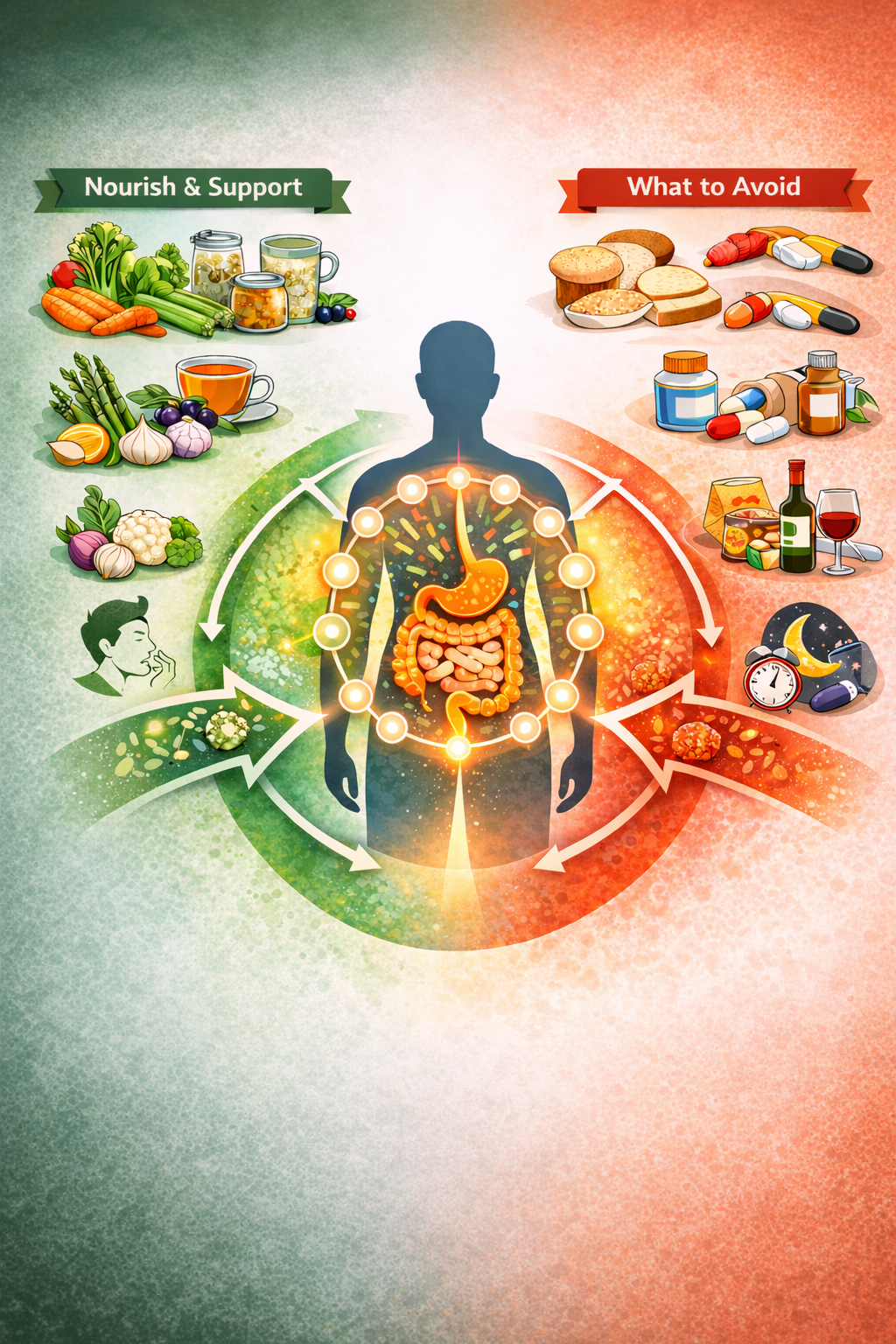
The solution is ecological, not pharmaceutical. The microbiome thrives on diversity, consistency, and biological signals that align with human physiology. Whole foods rich in fiber, polyphenols, and natural fermentation provide substrate for beneficial bacteria. Regular movement, restorative sleep, and stress regulation strengthen gut barrier integrity and immune signaling. When the internal ecosystem is supported, resilience increases across metabolic, cognitive, and inflammatory pathways. |
Try This
|
 |
Microbial diversity is declining in industrialized societies. Reduced diversity correlates with inflammation, insulin resistance, autoimmune disorders, and mood disturbances. Barrier dysfunction increases permeability, allowing endotoxins to stimulate systemic inflammation. The microbiome is not isolated to digestion. It interacts with immune cells, metabolic pathways, and the nervous system. Disruption in one area propagates across the organism.
This decline does not occur in isolation. It reflects reduced dietary complexity, repetitive food patterns, excessive hygiene, circadian disruption, environmental chemical exposure, chronic stress, and indiscriminate antibiotic use. When ecological pressure narrows microbial diversity, regulatory capacity weakens. The result is not merely digestive discomfort but systemic vulnerability. The internal ecosystem becomes less adaptable, less resilient, and more reactive. Over time, small daily inputs accumulate into measurable biological drift
Why It Matters
- Healthy diverse microbiome educe systemic inflammation throughout the body
- Stabilize blood glucose and metabolic control
- Strengthen immune defense and regulation
- Protect the integrity of the gut barrier
- Support steady energy production and utilization
- Improve mood stability and cognitive clarity
- Lower long-term risk of metabolic and autoimmune disease
- Slow biological processes that accelerate decline
What Not to Do
- Do not depend on probiotic supplements as a primary strategy
- Do not neglect prebiotic fiber, which feeds resident bacteria more effectively than adding new strains
- Avoid frequent or unnecessary antibiotic exposure, including indirect exposure through conventionally raised animal products
- Avoid diets high in refined sugar and flour-based foods that reduce microbial diversity
- Do not consume ultra processed foods containing emulsifiers and artificial additives
- Avoid chronic alcohol excess
- Do not maintain chronically irregular sleep and meal timing
Bottom Line
The microbiome functions as a regulatory interface between environment and biology. When nourished with diversity, rhythm, and whole food substrates, it promotes metabolic stability, immune precision, and systemic resilience. When neglected, it amplifies inflammation and disease risk. Supporting the microbiome is not a niche intervention. It is a foundational strategy for long term vitality.
In Embracing My Vitality, the microbiome is treated as biological infrastructure that must be cultivated continuously rather than repaired after dysfunction appears. The human body hosts multiple microbial ecosystems including the gut, oral cavity, lungs, skin, scalp, eyes, and reproductive tract. Each contributes to immune calibration, barrier integrity, and inflammatory balance. This article focuses specifically on the gut microbiome because of its central metabolic and immunological influence, yet it operates within a broader network of microbial environments that interact systemically. The internal ecology you maintain across these sites shapes resilience over time. The direction you support biologically becomes the direction you age.