
When Digestive Flow Falls Out of Sync
What if digestion, something you rarely think about and would rather not talk about, is quietly shaping your long-term health?
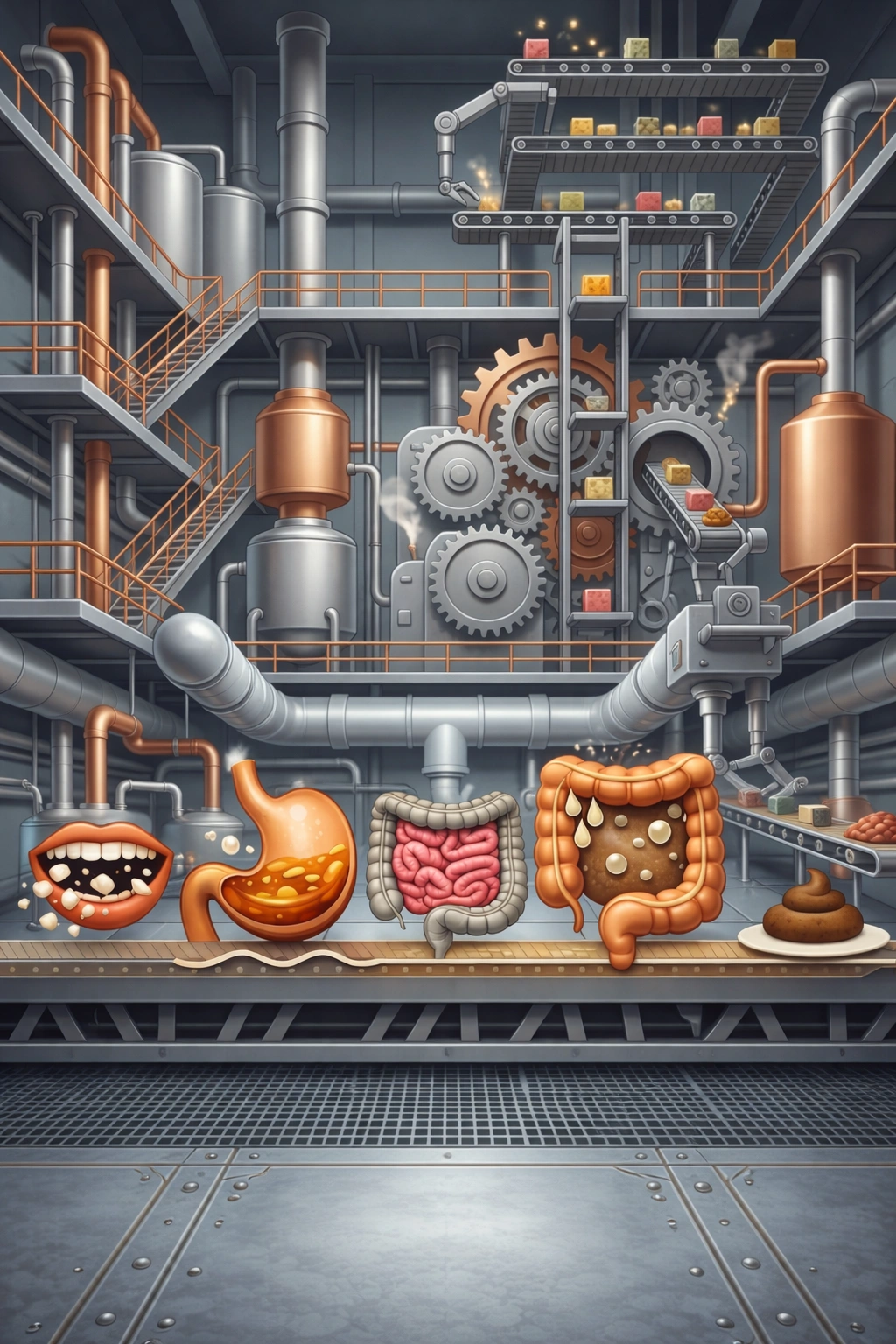
You eat well. The food looks right, the ingredients appear nutritious, and nothing feels excessive. Yet something does not feel right. Sometimes it shows up quickly, a quiet heaviness or pressure not long after the meal. Other times it arrives later, a slow build of gas, discomfort, or a sense that things are not moving the way they should. For some, everything moves too fast, with urgency and loose stools. For others, it barely moves at all, days pass, and when it does, it feels forced and incomplete. It doesn’t present as one clear problem. It feels scattered, inconsistent, and easy to ignore until it becomes routine. These signals are often dismissed because they seem minor or common. Yet many of the conditions may lead to most common cancers of the digestive system such as colorectal (in the top 3 globally), stomach, and liver cancers, develop over time from patterns that are too easily ignored. Most people focus on what they eat. Fewer pay attention to how the body handles it. Digestion is not just about food quality. It is about movement, transformation, and whether each stage completes its work before passing material forward. When flow is steady and each step is completed, the system stays quiet. When timing or completion is off, the body starts to signal. Digestion is not only mechanical. It is coordinated. Signals between the brain and the gut control movement, timing, and enzyme release. When you eat in a rushed or stressed state, this coordination shifts. The same meal can be handled differently depending on how you eat it, not just what you eat. The digestive tract may feel internal, but it functions as a controlled passage from outside to outside. What you swallow is not fully part of the body until it is broken down and absorbed. Everything else remains in transit. At each stage, the body decides what to let in and what to transition out. Food does not stop inside the body. It moves continuously but slows at specific points so essential work can be completed. These stages follow a clear path:
Each stage has a role. Each depends on the one before it. When one stage underperforms, the next inherits the problem. |
Timeline and transit time
Food does not move at a constant speed. It slows at each stage just long enough for the required work to be done, then moves on. The time spent along this path, and the total time from entry to exit, give a clear picture of how well the system is functioning.
The mouth prepares food within seconds to about a minute. The stomach processes it over roughly two to four hours. The small intestine continues for three to six hours, where most absorption takes place. The large intestine takes the longest, often twelve to forty-eight hours, shaping what remains.
Total transit time usually falls between twelve and seventy-two hours. Where you fall in that range matters.
- < 12 hours: Movement outpaces absorption. Stools are loose, often unformed, with urgency and a sense of incomplete processing.
- 12 – 24 hours: Fast and efficient. Common with whole, fibrous diets. Stools are soft, well-formed, easy to pass, and may occur once or twice per day.
- 24 – 36 hours: Balanced and stable. Digestion and absorption match movement. Stools are formed, smooth, and regular, typically once per day with little effort..
- 36 – 48 hours: Slowing. Fermentation increases, gas becomes more noticeable, and stools become firmer, sometimes requiring more effort to pass. Frequency may drop.
- > 48 hours: Material dries out. Stools become hard, fragmented or lumpy, with painful straining and a sense of incomplete evacuation.
Transit time shows up in daily patterns. One movement per day is common. Faster transit often leads to more frequent, softer stools. Slower transit reduces frequency and increases effort. What matters is not a rule, but consistency, ease, and a sense of completion.
A simple way to estimate your own transit time is with a beetroot test. Eat a portion of beetroot and note the time. Watch for when stool changes color. The gap between eating and the first visible color change gives a practical sense of your transit time.
Mouth
Chew food down mechanically and mixes it with saliva, which contains enzymes that begin carbohydrate digestion. This stage sets the condition for everything that follows. The more thoroughly food is broken down and hydrated at this point, the less strain is placed on later stages that rely on proper preparation rather than correction. When saliva is limited and the mouth is dry, this early step is reduced, and food moves forward less prepared.
When chewing is thorough, food arrives ready for the next step. When it is rushed, larger pieces move forward, forcing the stomach to work harder and longer to achieve what should have already been done. This shifts the burden downstream and often affects timing and comfort later in the process.
Slowing down, chewing properly, and allowing saliva to fully mix with food supports this stage. Eating distracted, rushing through meals, or swallowing quickly works against it. When this stage is off, the signal is subtle. Meals feel less satisfying, hunger may return sooner than expected, or there is a slight heaviness early on that is easy to overlook but tends to repeat.
Stomach
The stomach transforms food into a smooth, semi-liquid mixture that can be passed forward in a controlled way. Acid unfolds proteins, enzymes begin their breakdown, and muscular contractions mix everything evenly so that digestion occurs uniformly. It also regulates timing, releasing contents gradually into the small intestine rather than all at once. Meals higher in fat tend to remain longer in the stomach, which can slow this process and increase pressure if portions are large.
When this stage works well, the process is quiet and unnoticeable. When it does not, pressure builds or release becomes uneven. Food may linger longer than it should or move forward before it is properly prepared, both of which disrupt the stages that follow.
Moderate meal size and spacing meals support this stage. What you do after eating also matters. In some cultures, a short rest after lunch is common, but lying flat too soon can work against downward flow. Even a brief walk, five to ten minutes, helps maintain direction and timing. Overeating, eating too quickly, or constant grazing further interfere with the stomach’s ability to manage release.
Common signals include heaviness after meals, early bloating, frequent burping, and acid reflux, where content moves upward instead of continuing down. These are signs that control and direction are not being maintained.
Small intestine
This is where most nutrients enter the body. By the time food reaches this stage, it should already be well prepared. The small intestine becomes the main site of chemical breakdown and absorption. The pancreas releases enzymes into this space, including amylase for carbohydrates, proteases for proteins, and lipase for fats. At the same time, the liver produces bile, stored in the gallbladder, which helps break fats into smaller droplets so enzymes can act on them effectively. The lining of the small intestine then adds its own final enzymes, completing the breakdown into forms that can cross into the bloodstream. When bile flow is not adequate, fat digestion is reduced, which can later show up as greasy, pale, or floating stools.
This stage is not passive. The small intestine continuously mixes and moves its contents, allowing nutrients to come into contact with the intestinal surface. When this movement is steady, absorption is efficient. When it slows or becomes irregular, the process loses efficiency and discomfort can build.
When food arrives in the right form, absorption is smooth and consistent. When it does not, nutrients pass unused or irritate the lining, creating a gap between what is eaten and what the body actually receives. The system continues to move, but the outcome is reduced.
Proper chewing earlier and light movement after meals support this stage. Even a short walk helps maintain flow and contact with the intestinal surface. Remaining seated for long periods after eating can slow this process. Certain foods, such as dairy, and some medications can alter this movement.
When this stage is off, the signals are less immediate but more widespread. Fatigue after meals, delayed gas, or ongoing cravings despite eating enough often point here.
Large intestine
What remains moves into the large intestine, where water is absorbed and stool is formed. Bacteria, often referred to as the microbiome, act on the remaining material, producing gases and compounds that influence not only digestion but overall health. Some of these byproducts help support the intestinal lining and play a role in how the body regulates inflammation and energy use. This stage is slower and more variable, and it is where most differences in transit time appear.
This stage is also closely linked to the nervous system. Signals travel between the gut and the brain, influencing movement and sensation. Eating itself can trigger activity here, which is why some people feel the urge to go shortly after a meal. Ignoring that signal repeatedly can weaken the response over time and contribute to slower movement.
When movement is steady, water balance is maintained and stool forms with the right consistency. When movement slows, more water is removed, and stool becomes dry, harder, and more difficult to pass. When movement is too fast, there is less time for water absorption, and stools become loose.
Hydration, fiber from whole foods, and regular movement support this stage. Fiber provides structure, holds water, and feeds the microbiome, helping stool move without effort. Low fiber intake, dehydration, and inactivity slow the process. Irritants or sensitivities can push it in the opposite direction. Signals here are visible and easy to track. Slower movement leads to dry, hard stools and infrequent bowel movements. Faster movement leads to loose stools and urgency. A healthy pattern is not just about frequency, but ease and a sense of complete evacuation.
In some cases, symptoms are not only about flow or diet. Intestinal parasites, such as Intestinal worms, can interfere with absorption and movement. They may show up as unexplained changes in stool, persistent discomfort, or irregular patterns that do not respond to usual adjustments. While less common in some regions, they remain a factor to be aware of
Exit
The final stage reflects everything that happened before it. Elimination should be regular, easy, and complete, without strain or discomfort. It is the visible outcome of how well the system has managed flow, transformation, and timing, and often the simplest way to observe whether digestion is working as it should.
When this stage is off, the signals are clear. Straining, incomplete evacuation, or irregular timing indicate that earlier stages did not complete their work effectively. Ignoring the natural urge to go can weaken this pattern over time and contribute to slower movement. These are not isolated issues, but the result of how the entire process has been managed from start to finish.
Try This
|
 |
Start with one meal. Sit down without distraction and slow it down. Chew until the food is soft and easy to swallow without effort. Most meals finish too quickly when attention is elsewhere, so extend it slightly and let the process unfold instead of rushing through it. After eating, move. A short walk is enough to maintain direction and timing. Avoid sitting immediately, as stopping too soon can interfere with the natural flow that continues after the meal.
Track what happens later, not just right after eating. Check in at one hour, three hours, and the next day. Look for steady energy, absence of heaviness, and a normal pattern of elimination, including timing, ease, and stool form. Change one habit at a time. Observe the effect before adding another. Digestion improves when timing, movement, and attention are aligned.
Why It Matters
When digestion works, it stays invisible. Energy is steady, meals feel complete, and the body moves without effort. When it does not, the effects extend beyond the gut. Incomplete breakdown and absorption mean the body runs on less than what was eaten. Slower movement increases fermentation and pressure, while faster movement reduces what the body can take in. Both create a mismatch between intake and outcome.
Over time, patterns settle. Irregular timing becomes routine, discomfort becomes expected, and signals are ignored. This is where long-term risk builds. Many digestive-related conditions, including cancers of the colon, stomach, and pancreas, develop on top of patterns that were once subtle and repeated. Digestion is not only about comfort. It determines how well the body is supplied, how effectively material is cleared, and how stable energy and function remain over time.
What Not to Do
- Rushing meals and swallowing without proper chewing. Food moves forward unprepared, increasing the workload on later stages.
- Eating large meals or grazing continuously. The system loses its rhythm and cannot complete each cycle properly.
- Drinking large amounts of fluid during meals. This disrupts the stomach environment and weakens mixing and breakdown.
- Sitting or lying down immediately after eating. Movement slows and upward pressure becomes more likely.
- Relying on refined, low-fiber foods. They lack structure, do not support the microbiome, and lead to poor stool formation.
- Ignoring signals such as bloating, irregular timing, or changes in stool. Patterns settle and become harder to correct.
Bottom Line
Digestion is not just about what you eat. It is a process of movement, timing, and completion. Food must be broken down, transformed, absorbed, and moved forward at the right pace. When one stage is rushed or incomplete, the next carries the consequence. Over time, this shows up as heaviness, irregularity, unstable energy, or discomfort that feels unrelated but shares the same root.
You do not control the organs, but you control the conditions they work under. How you chew, how you space your meals, how you move, and the form your food takes all shape the outcome. When flow is steady and each stage completes its role, digestion becomes quiet and predictable. When it does not, the signals are consistent if you know how to read them.
This perspective is part of a broader approach to health developed in the book Living Well in the Modern World, which explores how everyday choices shape how the body functions, adapts, and maintains balance over time.