
Prediabetes Is Built Daily, Not Revealed by a Blood Test
What if your blood test looks normal while your daily habits are quietly building prediabetes?
Most people rely on a blood test to tell them when something is wrong. But daily life already shows the pattern. Energy dips after meals, hunger returns too soon, focus fades, cravings increase, and weight slowly builds, often around the midsection. Sleep becomes less restorative, and late eating feels normal. These are not random. They reflect repeated glucose spikes followed by drops, combined with insulin staying elevated for too long. This pattern is driven by how food is structured, how often you eat, how late you eat, and how little time the body gets to return to baseline. Over time, this becomes the default state, even as the system drifts toward prediabetes.
The solution is not a stricter diet or fewer calories. It is changing the structure that drives the response. Build meals that slow glucose entry, anchor eating to clear windows, and stop late intake so the system can reset overnight. Use movement after meals to direct glucose into muscle instead of storage. When these inputs change, the pattern changes. Glucose rises less, insulin demand lowers, and energy, appetite, and weight begin to stabilize. This is a system shift, not a willpower exercise. |
Try This
|
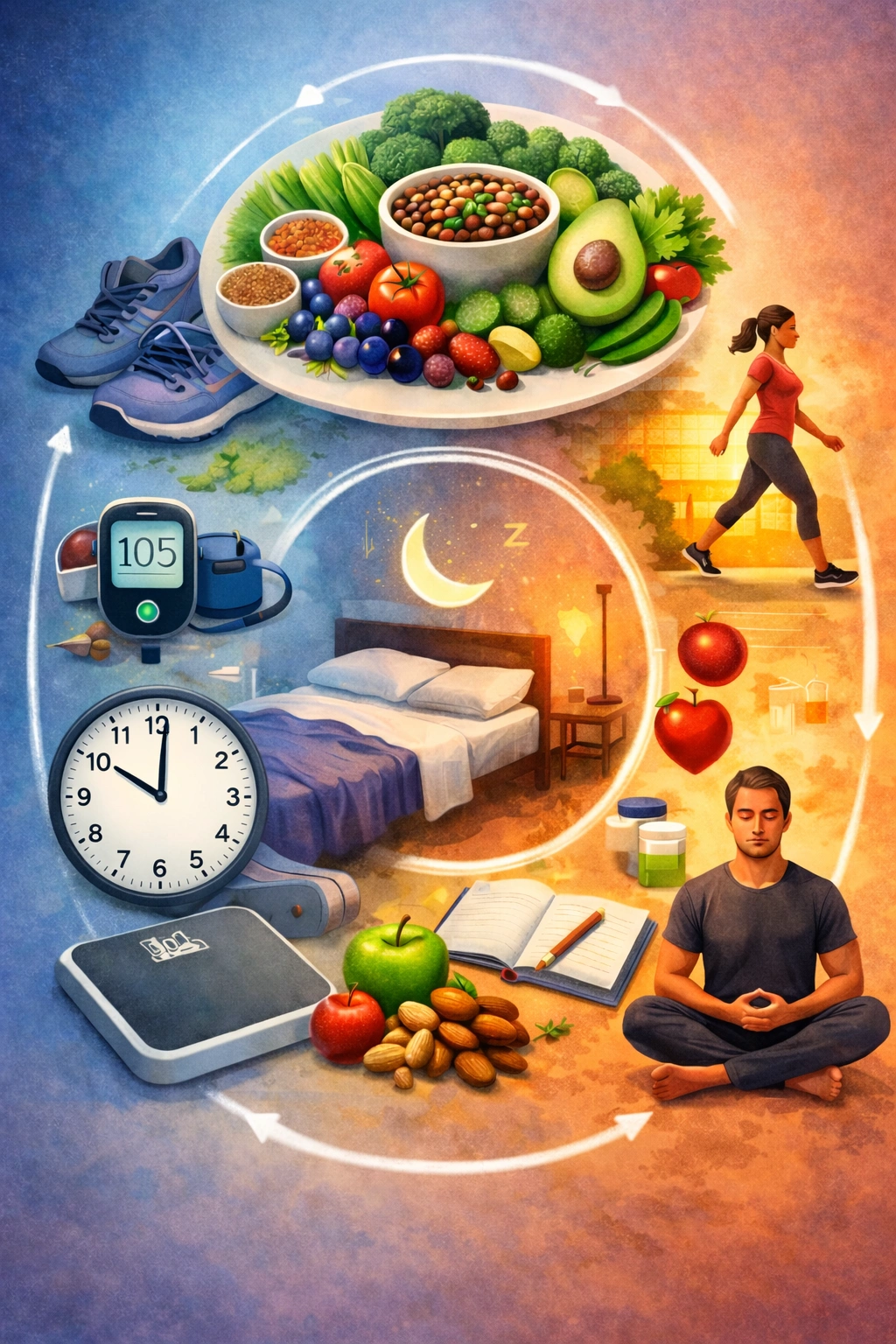 |
These changes do not restrict food. They change how food enters and moves through the system. Each step reduces repeated spikes, lowers sustained pressure, and gives the body time to reset. Timing and consistency train the body to anticipate what comes next, stabilizing glucose, insulin, and appetite across the day. When repeated daily, these patterns become automatic and shift the system from accumulation to balance.
Why It Matters
- Energy crashes after meals lead to more frequent eating, which keeps insulin elevated and blocks access to stored energy.
- Hunger returning quickly drives larger portions and snacking, increasing total intake without awareness.
- Midsection weight gain reflects repeated storage signals, with visceral fat building around organs and increasing internal metabolic pressure over time.
- Late eating disrupts overnight reset, leading to higher morning glucose and a carryover effect across the next day.
- Spreading food across long hours removes recovery windows, keeping the system in constant processing mode.
- Repeated spikes and drops train the body to expect instability, reinforcing cravings, fatigue, and loss of control.
What Not to Do
- Do not rely on a normal blood test as proof that you don’t have to take action.
- Do not treat calories as the main lever while ignoring nutrient quality, timing, order, and frequency of eating.
- Do not snack or eat across long hours that remove recovery windows.
- Do not start meals with refined carbohydrates or eat starch in isolation.
- Do not use drinks with sugar, including juices, as part of regular intake.
- Do not assume midsection weight gain is expected with age or harmless.
Bottom Line
Prediabetes builds through repeated patterns you experience daily. Meals that spike quickly, frequent eating with no gaps, late intake, and long eating windows keep glucose elevated and drive storage, showing up as unstable energy, rising hunger, and midsection weight gain. Starting meals with fiber, spacing meals to allow reset, stopping food earlier in the evening, and walking after each meal begin to reverse this pattern.
Embracing My Vitality reframes this path. Change the structure, and the direction changes. Consistent timing, better meal order, and simple movement restore balance without relying on restriction or motivation. The goal is not control. It is alignment with how the system is designed to work.