
The Real Reason You Feel Tired After Eating
What if feeling tired after eating is your body’s way of telling you the meal was not quite right for you?
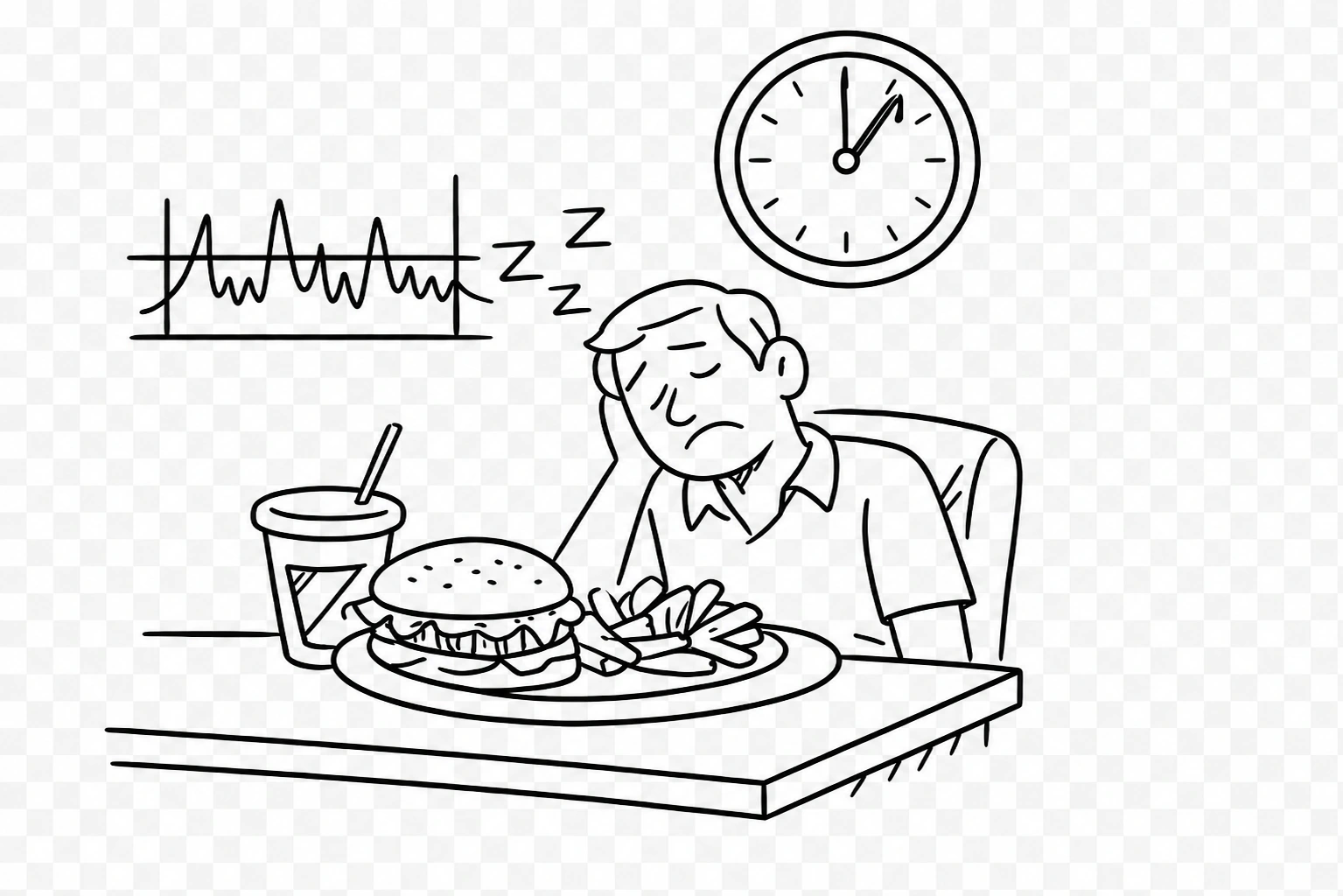
Many people accept post-meal tiredness as normal, especially after lunch or dinner. Some even feel they need a nap. But food should not leave you drained. When a meal is too large, too refined, too oily, low in fiber, or eaten too quickly, the body has to work harder to digest it.
After a large or heavy meal, more blood flow and energy are directed toward the digestive system. The body normally protects blood flow to the brain, but the extra digestive load can still leave you feeling heavy, sleepy, or mentally slower. A second pattern may appear later, when hunger returns too quickly. That often happens when glucose rises fast, insulin responds strongly, and energy falls again instead of rising and falling steadily.
The solution is to build meals that your body can handle more smoothly. Start with vegetables or other fiber-rich foods, include enough protein, use fats sparingly, keep refined starches and sweets smaller and later in the meal, and avoid liquid calories. Eat slowly and stop before feeling stuffed. After eating, take a 10 to 15 minute walk so working muscles can absorb more incoming glucose, reducing how much excess energy is pushed toward storage in fat cells.
When the meal is better structured, digestion feels lighter, energy holds longer, and the post-meal crash becomes less likely. |
Try This
|
 |
These changes make the meal easier for your body to process. Fiber slows entry, protein helps the meal hold, modest fat reduces heaviness, and walking gives muscles a chance to use incoming glucose. Repeated daily, this turns meals from a source of fatigue into a steadier source of energy.
Why It Matters
- A lighter, well-structured meal helps you feel steady instead of heavy after eating.
- Starting with fiber-rich foods slows the meal down and supports smoother digestion.
- Adding enough protein helps the meal hold longer without needing extra snacks.
- Using fats sparingly reduces the heavy feeling that often follows oily or rich meals.
- Placing starches and sweets later in the meal helps avoid a fast rise-and-drop pattern.
- Eating slowly gives fullness signals time to catch up before the meal becomes too much.
- Walking after eating helps shift incoming energy toward working muscles, leaving you clearer and less sluggish.
What Not to Do
- Do not build meals around refined starches, sweets, or liquid calories.
- Do not treat a large oily meal as harmless just because it is homemade.
- Do not rush through meals or keep eating until you feel stuffed.
- Do not sit still after a heavy meal.
- Do not snack to push through tiredness.
- Do not spread food across long hours and call it stable energy.
- Do not ignore repeated post-meal fatigue.
Bottom Line
Post-meal tiredness often comes from meals that are too large, too refined, too oily, too low in fiber, eaten too fast, or followed by sitting still. A better meal pattern starts with fiber-rich foods, includes enough protein, uses fats sparingly, places starches later, avoids liquid calories, and adds a short walk after eating.
This is one of the daily patterns explored in Living Well Without Diabetes, A Practical Approach to Glucose Control, available on Amazon worldwide. The goal is not restriction. It is to build meals that feel lighter, support steadier energy, and help you continue the day without feeling drained.