
The Hidden Danger of Belly Fat
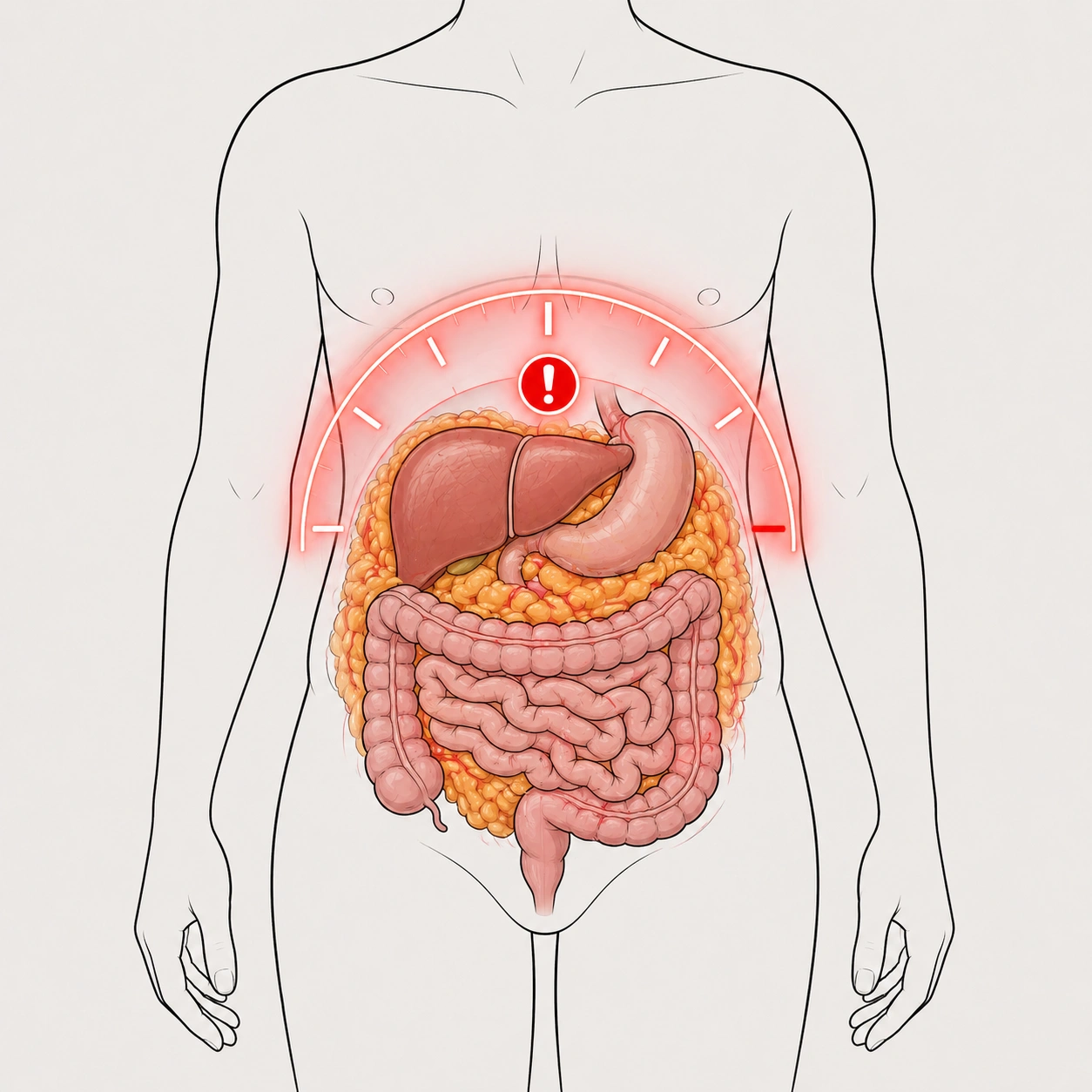
What if belly fat is the flashing red light on your life dashboard?
Belly fat is not only fat under the skin. It can be the visible sign that fat is also collecting deeper inside, around organs and blood vessels, and sometimes inside the liver itself. At first, this deeper storage pattern may show up as everyday problems such as lower energy, stronger cravings, rising blood pressure, fatty liver, abnormal cholesterol, rising glucose, and prediabetes.
If ignored, the same pattern can move toward more serious diseases, including type 2 diabetes, heart attack, stroke, kidney damage, nerve damage, poor circulation, slow-healing wounds, limb loss, and reduced independence. The waistline may be the first thing you notice, but the deeper problem is often happening inside, where you cannot see it directly.
The answer is to stop repeating the habits that cause the body to store excess energy. That starts with changing the daily pattern: how meals are built, how often food is introduced, how much the body moves after eating, and whether the system gets enough time to reset.
Instead of chasing belly fat directly, focus on the habits that create it. Build meals that hold longer, reduce grazing, use your muscles after meals, protect sleep, and make the easier choice the healthier one. |
Try This
|
 |
Build meals that hold longer, stop eating all day, and use your muscles more often. Start meals with fiber and protein, avoid grazing and caloric drinks between meals, walk after eating, break long sitting, add resistance exercise weekly, keep dinner lighter, and remove processed snack triggers.
Why It Matters
Protect steady energy. Fewer crashes, cravings, and heavy meals that drain the day.
- Protect glucose control. Keep rising glucose and prediabetes from becoming daily diabetes management.
- Protect heart and brain health. Reduce the path toward heart attack and stroke risk.
- Protect circulation. Support better blood flow, wound healing, walking ability, and mobility.
- Protect kidney function. Reduce the long-term pressure that can lead to kidney damage and dialysis.
- Protect independence. Preserve freedom from constant monitoring, medication escalation, appointments, and preventable limits on daily life.
What Not to Do
Do not chase quick fixes. Change the pattern, not just the waistline.
- Do not starve. Extreme restriction often leads to rebound.
- Do not rely on workouts alone. Exercise cannot erase all-day eating.
- Do not graze. Snacks and caloric drinks keep storage active.
- Do not ignore sleep. Poor sleep drives hunger and storage.
- Do not blame age. Aging matters, but habits still drive direction.
- Do not trust the scale alone. Watch waist, energy, cravings, pressure, and glucose.
Bottom Line
Belly fat is not just something to lose. It is a signal to read. When fat gathers around the waist, the same storage pattern may also be affecting organs, blood vessels, energy, glucose control, and long-term independence. The answer is not punishment or quick fixes. It is to change the repeated habits that created the pattern.
This is one of the daily patterns explored in Living Well Without Diabetes, A Practical Approach to Glucose Control, available on Amazon worldwide. The goal is not restriction. It is to build meals and routines that reduce cravings, support steadier energy, and help the body move away from hidden storage and back toward control.