
Mold Hides in Plain Sight
What if hidden mold is quietly affecting your health?
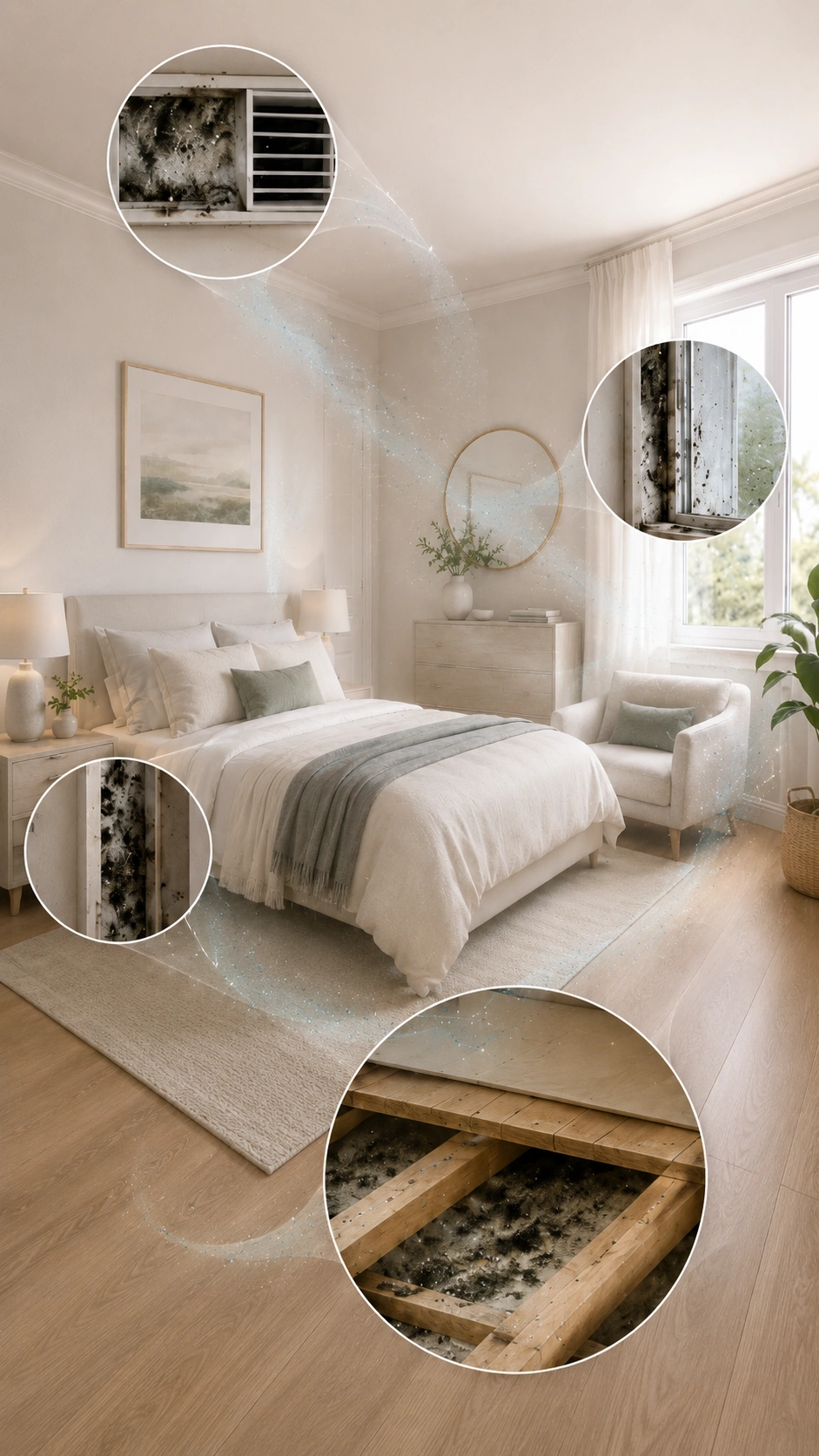
It is easy to overlook mold because it does not always make its presence known. It is not just the obvious black patch in the corner of a bathroom or a stain you can spot from across the room. Mold can hide behind wallpaper, inside vents, in AC systems, under floors, around window sills, inside dishwashers and washing machines, in older homes, poorly ventilated rooms, old cars, pillows, mattresses, carpets, old books, stored boxes, forgotten food, old coffee grounds, potting soil bags, or damp clothes. A space may look perfectly clean while still causing trouble day after day.
That is why mold is so often missed. You may be told your medical tests look fine, or you may blame congestion on allergies, headaches on stress, mood changes on life pressure, poor sleep on age, or exhaustion on being busy. But if the same symptoms keep creeping back without an obvious cause, especially in certain rooms, buildings, cars, storage areas, or damp seasons, it is worth looking at your environment.
Mold is not one single problem. Different molds can grow in damp indoor spaces, and the practical response is not to focus only on black mold. The practical response is to find moisture, reduce exposure, and remove the source. Some foods can also carry mold-related toxins even when mold is not obvious, especially poorly stored peanuts, grains, dried foods, and coffee. The point is not to fear every room or every food. The point is to recognize that mold exposure can come from places that look normal until you look closer.
Mold rarely presents as one clear-cut problem. Instead, it often shows up as a collection of small, seemingly unrelated issues. Coughing, sinus pressure, runny nose, itchy eyes, hives, skin irritation, headaches, fatigue, brain fog, anxiety, mood changes, poor sleep, histamine-like reactions, or digestive trouble may only start to make sense once you connect them to where you spend your time.
People react differently. If you are already dealing with allergies, asthma, chronic stress, poor sleep, gut issues, slow recovery, or an overburdened immune system, you may notice symptoms long before someone else does. The body’s ability to clear and manage exposure depends partly on the liver, intestines, skin, and immune system. Mold is not just a building issue. It is an exposure issue, and how it affects you depends partly on your own threshold.
Start paying attention to patterns. Do you feel worse in a specific room, after digging through storage, after handling old fabrics, after opening old books, after using an old car, after gardening, or when the weather turns damp? Do you feel better when you leave the house, sleep elsewhere, clean an area, use a dehumidifier, or improve airflow? These patterns do not prove mold is present, but they are useful clues about where to start looking.
If suspicion remains, testing can help. Blood or urine tests can check for mold-related toxins in the body, while air or surface testing can help assess the home. If routine explanations do not fit, the environment should become part of the differential picture, especially when symptoms follow a room, building, car, season, smell, stored item, or damp history. You do not need a test for every musty smell, but testing can be useful when symptoms persist and the source is hard to find.
When you find mold, the first step is practical. Improve ventilation. Control humidity. Dry wet materials quickly. Remove contaminated food, fabrics, or porous items that cannot be cleaned safely. Inspect after leaks, floods, condensation, or heavy rain. Be careful when disturbing moldy materials, dusty bags, old carpets, vents, or hidden cavities because spores, musty volatile compounds, and particles can become airborne. If mold keeps returning, do not treat it as a failure of cleaning. Treat it as a moisture problem that has not been solved. |
Try This
|
 |
Reduce moisture, improve airflow, remove damp or moldy materials, and track whether symptoms follow specific rooms, seasons, or activities. Mold control is not just cleaning. It is finding the exposure pattern and removing the conditions that keep it active.
Why It Matters
- Avoid repeated exposure before symptoms become harder to ignore.
- Avoid treating mold as only a cleaning problem.
- Avoid overlooking musty rooms, damp fabrics, stale air, or contaminated stored items.
- Avoid dismissing congestion, coughing, headaches, fatigue, brain fog, poor sleep, skin irritation, or digestive discomfort when they follow a pattern.
- Avoid waiting until your body is struggling before checking the environment.
- Avoid asking only where the stain is. Ask where the exposure is coming from.
What Not to Do
- Do not keep cleaning the same mold patch without fixing moisture, condensation, or poor airflow.
- Do not rely on bleach as the main solution, especially on porous materials. It can irritate airways, create harmful fumes if mixed with other cleaners, and leave the deeper moisture problem unsolved.
- Do not wait for symptoms to become severe before investigating repeated exposure.
- Do not dismiss symptoms that keep returning in the same room, season, building, or car.
- Do not ignore musty smells because the space looks clean.
- Do not let wet towels, clothes, rugs, fabrics, pillows, or mattresses stay damp indoors.
- Do not keep moldy food, old coffee grounds, damp stored items, or musty books.
- Do not open compost or potting soil bags close to your face.
Bottom Line
Mold is not just something to clean. It is a signal that moisture, airflow, or contaminated materials need attention before repeated exposure becomes part of daily life. Start with the source. Control humidity, improve ventilation, dry damp materials quickly, remove contaminated items, and track whether symptoms follow certain rooms, seasons, or activities.
This is one of the hidden home exposures explored in Embracing My Vitality, Living Well in the Modern World, available on Amazon worldwide.